


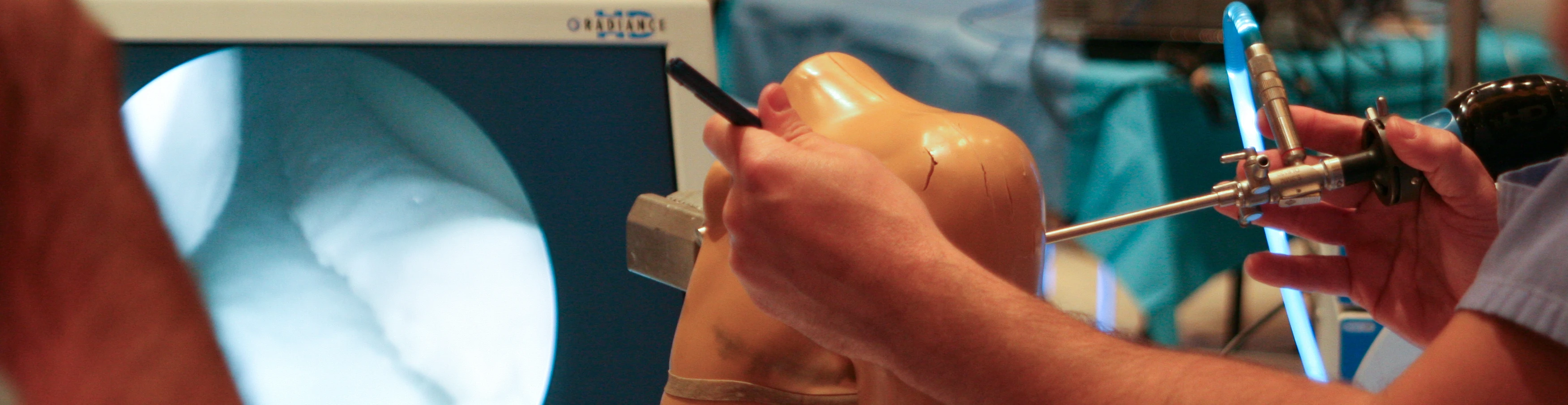
Anatomy Models
Anatomically Representative Models for Education, Training, and Simulation
Sawbones anatomy models are designed to support education, procedural training, research, product development, device sales, and demonstration. Our portfolio includes a broad range of human anatomy models as well as a selection of canine, feline, and equine models, giving customers flexible options across orthopaedic, veterinary, and many other applications.
Anatomies are available in a wide range of configurations and materials making it easy to move from foundational anatomical study to advanced hands-on simulation.
Beyond typical anatomy, many models are available with enhanced features such as fractures, pathologies, muscles, ligaments, tendons, cartilage, and soft tissue elements. Individual anatomies can also be combined to create more detailed assemblies, helping users better understand anatomical relationships, joint structure, and procedural access. This flexibility allows customers to build the right model solution for a wide range of learning, training, and evaluation needs.
Model Types
Typical Anatomy
Standard intact anatomical models designed for education, procedural training, product evaluation, and demonstration.
Typical Anatomy Measurements
| Human Anatomy | Property | Large | Medium | Small | Average Asian | Pediatric |
|---|---|---|---|---|---|---|
| Humerus | Length (cm) | 36 | 30 | — | — | 26 |
| Canal Diameter (mm) | 9.5 | 9 | — | — | 6 or 8 | |
| Radius | Length (cm) | 25 | 24 | — | — | — |
| Canal Diameter (mm) | 5.5 or 6.4 | — | — | — | — | |
| Ulna | Length (cm) | 27.5 | 26 | 23 | — | — |
| Canal Diameter (mm) | 5 | — | — | — | — | |
| Femur | Length (cm) | 47 | 42 | 35 | 41 | 30 |
| Distal AML (mm) | 43 | 40 | 33 | — | — | |
| Distal PML (mm) | 51 | 44 | 39 | — | — | |
| ML Condyle (mm) | — | — | — | 73 | — | |
| LAP (mm) | 66 | 61 | 51 | — | — | |
| MAP (mm) | 62 | 56 | 49 | — | — | |
| Fem Head Diam (mm) | 49 | 42 | 39 | 42 | — | |
| Canal Diameter (mm) | 16 | 15 | 9.5 | 12 | — | |
| Tibia | Length (cm) | 42 | 38 | 30 | 36.7 | 25 |
| Distal AML (mm) | 46 | 39 | 30 | — | — | |
| Distal PML (mm) | 49 | 42 | 34 | — | — | |
| ML Plateau (mm) | — | — | — | 70 | — | |
| LAP (mm) | 41 | 34 | 32 | — | — | |
| MAP (mm) | 86 | 72 | 60 | — | — | |
| Canal Diameter (mm) | 12.5 | 12 | 8 | — | — | |
| Fibula | Length (cm) | 42 | 38 | — | — | — |
Note: Measurements shown are overall lengths for representative Typical Anatomy models and are intended as a general guide. Availability of sizes, materials, features, and model variations may differ by model type and configuration.
Advanced Soft Tissue
Models that incorporate surrounding structures such as muscles, tendons, ligaments, nerves, arteries, cartilage, and other soft tissue features for a more realistic training environment.
Arthroplasty
Models developed for joint replacement education, implant demonstration, and procedural training.
Arthroscopy
Models designed for minimally invasive and open procedural training, supporting diagnostic evaluation and operative skills practice.
Aspiration
Models created for training in aspiration techniques and fluid access in an anatomically relevant setting.
Diagnostic Evaluation
Models that support anatomical study, clinical assessment training, and procedural decision-making through hands-on learning.
FAST Education
Models designed to support focused assessment training and build familiarity with key anatomical landmarks and procedural concepts.
Fractured
Models that replicate clinically relevant fracture patterns for trauma education, fixation training, and procedural practice.
Fracture Reduction and Casting
Models used for reduction practice, immobilization techniques, and casting education.
Grafts
Models that support reconstruction and surgical skills training involving graft preparation, handling, placement, and fixation.
IM Nail
Models designed for intramedullary nailing education and procedure practice.
Intraosseous Injection
Models created for access training and procedural practice in anatomically representative bone structures.
Injection
Models intended for injection training, anatomical targeting, and repeatable hands-on procedural practice.
Joint Injection
Models designed to support training in anatomical targeting, landmark identification, needle placement, and joint injection technique.
Ligaments and Tendons
Models focused on repair and reconstruction training involving soft tissue handling, fixation, and procedural technique.
Minimally Invasive Surgery
Models that support training in techniques requiring smaller access points, specialized instrumentation, and precise anatomical orientation.
Pediatric and Neonatal
Models designed to represent younger anatomies for age-specific education, training, and simulation.
Suturing and Knotting
Models that support basic and advanced soft tissue skills training, including closure techniques and knot security.
Vascular Access
Models designed to support training in anatomical targeting, vessel access, needle placement, and vascular access technique.
Display Models
Models intended for visual demonstration, patient education, and product presentation.
Ultrasound Models
Models designed to support ultrasound-based training in anatomical targeting, image acquisition, needle guidance, and procedural technique.
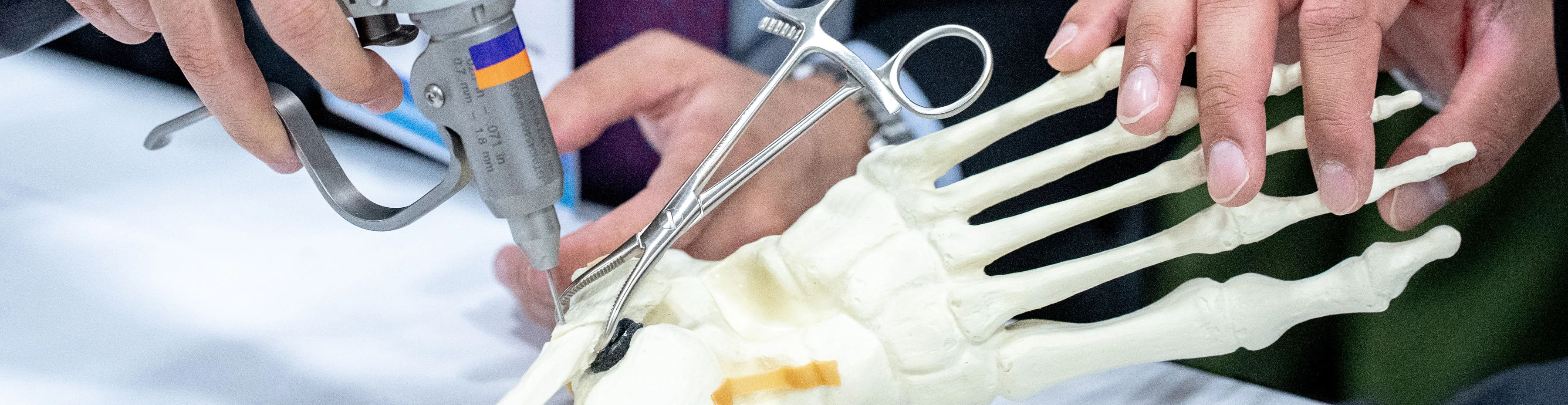
Why Choose Sawbones Anatomy Models?
Sawbones anatomy models are built for repeatable, hands-on learning across a broad range of educational and procedural applications. From standard anatomy to fractures, soft tissue, arthroscopy, arthroplasty, grafts, and age-specific models, the portfolio is designed to help customers teach, learn, evaluate, and demonstrate with confidence.
Applications
- Education and skills labs
- Procedural training and simulation
- Product development and evaluation
- Clinical demonstration
- Trauma and fixation practice
- Vascular access technique practice and training
- Arthroscopy and minimally invasive procedure training
- Patient education and product display
Find the Right Anatomy Model for Your Training Needs
Sawbones offers anatomy models in a wide range of anatomies, configurations, and assemblies to help meet your specific educational and procedural goals.
Contact Us